


R. Scott Electric
Our Team
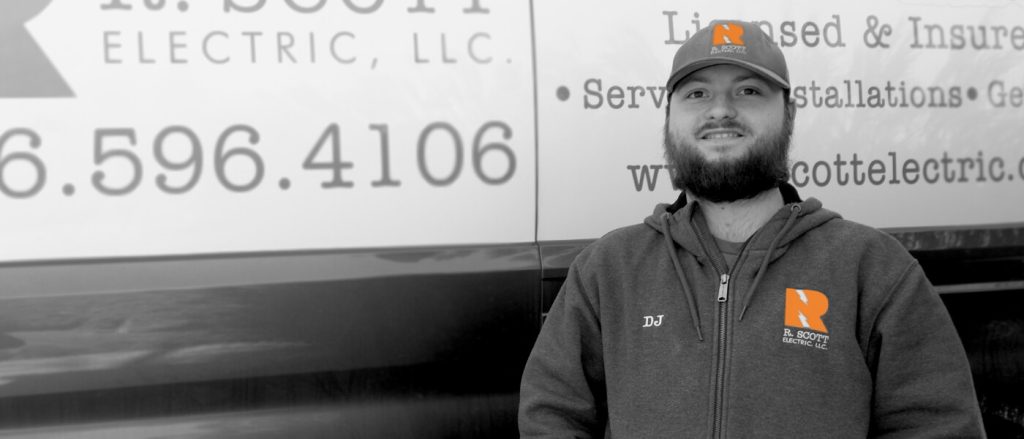
Scott • Darin (DJ) • Kyle • Brandon
We’re certified master electricians. Our team has more than 45 years combined experience serving residential and commercial clients.
- Commercial and residential
- Licensed and insured
- Service and installations
- Generators and more
We’re located in and serve southeast Michigan. Serving:
- Wayne, Oakland, Macomb counties, and
- Washtenaw, Genesee, and Lapeer counties, or
- Contact us to schedule work in other areas of Michigan or ask for a trusted partner referral
☎️ Call us today at 586-596-4106 or fill out the form.
Contact Us
586-596-4106
Frequently Asked Questions
What’s wrong with my circuit breaker? It seems to keep tripping.
Answer: A circuit breaker trip means there is a problem, but it’s also a safety measure to prevent overheating and potential fires. The three most common causes are:
- Overloaded Circuit: You have too many appliances (like space heaters or hairdryers) running on one circuit at the same time. They draw too much power and trip the breaker:
- Possible quick / DIY fixes: don’t use appliances on the same breaker, or use them in different rooms, which should be on different circuits
- Possible pro fixes: my team can check it out. We might install more circuits, redistribute circuits, or install a power panel (box) that can provide more power.
- Ground Fault: A hot wire is touching the ground wire or the metal box.
- Possible quick / DIY fix: If a breaker trips once, try resetting it.
- Possible pro fix: If it trips immediately or repeatedly, do not keep resetting it. Call us to investigate the underlying issue.
- Short Circuit: A hot wire is touching a neutral wire somewhere in your system.
- This can be dangerous, even a fire risk. If you find overheated wires, see flickering lights often, smell burning smells, or see sparks coming from equipment, you should contact our team or a licensed electrician.
Why do my lights flicker? Or why do they dim when an appliance turns on?
Answer: Occasional flickering might just be a loose bulb, but if your lights dim noticeably when a major appliance (like an AC, space heater, or vacuum) turns on, it usually indicates that the circuit is overloaded or the wiring is outdated.
In older homes, this can be a sign of a loose neutral connection, which is a significant fire hazard. We recommend contacting us for a safety inspection to determine if a heavy-up (panel upgrade) or dedicated circuit is required.
What is a GFCI outlet? Do I need one?
Answer: GFCI stands for Ground Fault Circuit Interrupter. These are the outlets with the “Test” and “Reset” buttons in the middle (between the two plug). They are designed to cut power instantly if they detect an imbalance in current – like in a wet area like a bathroom. Electrical code requires GFCIs in bathrooms, kitchens, laundry rooms, garages, and outdoor areas.If yours trips, press the “Reset” button.
- You can likely hit the reset button if it trips and everything will be back to normal
- If it won’t reset, the outlet may be faulty and need replacement. Some people replace these themselves, you can be the units at a hardware store, but it’s always best to contact us or a licensed professional
My house has aluminum wiring or “Knob and Tube.” Is that safe?
Answer: Most homes built between the late 1800s and 1940s likely have Knob and Tube. Homes built in the mid-60s to early 70s likely have Aluminum. Both of these mean your wiring probably does not meet modern safety standards.
- Knob and Tube: lacks a ground wire, making it dangerous for modern electronics.
- Aluminum Wiring: expands and contracts with heat differently than copper, leading to loose connections and fire risks.
For older homes, we highly recommend you contact us for a visit. We can usually fix these issues without tearing down all your walls, but in rare cases, a rewire is the best and safest option.
Can you install an EV (Electric Vehicle) charger in my garage?
Answer: Yes. For sure! There are two main types of EV chargers. Level-1 and Level-2. We can do both.
- Level 1 use standard outlets – these are very slow to charge modern EVs, in many cases even an overnight charge will not top off the EV
- Level 2 – requires a dedicated 240-vole circuit, just like an electric dryer uses. This allows for fast charging (lenghts depend on the type of EV). You’ll be most happy with a Level 2 charger. We will assess your electrical panel / electrical box to ensure it has the capacity to handle the additional load and install the charger safely according to manufacturer specifications.
Can you install a generator or whole-house generator?
Answer: Yes, absolutely. This is a primary expertise of our team. I (Scott) have worked on residential and commercial generators for years, including installations for the Detroit Zoo!
- We can install a whole-house generator that kicks on the second the power goes off
- We can also do all the wiring involved with any type of generator, beware, there are risks involved, please contact our team!
Copyright ©️2025 R. Scott Electric